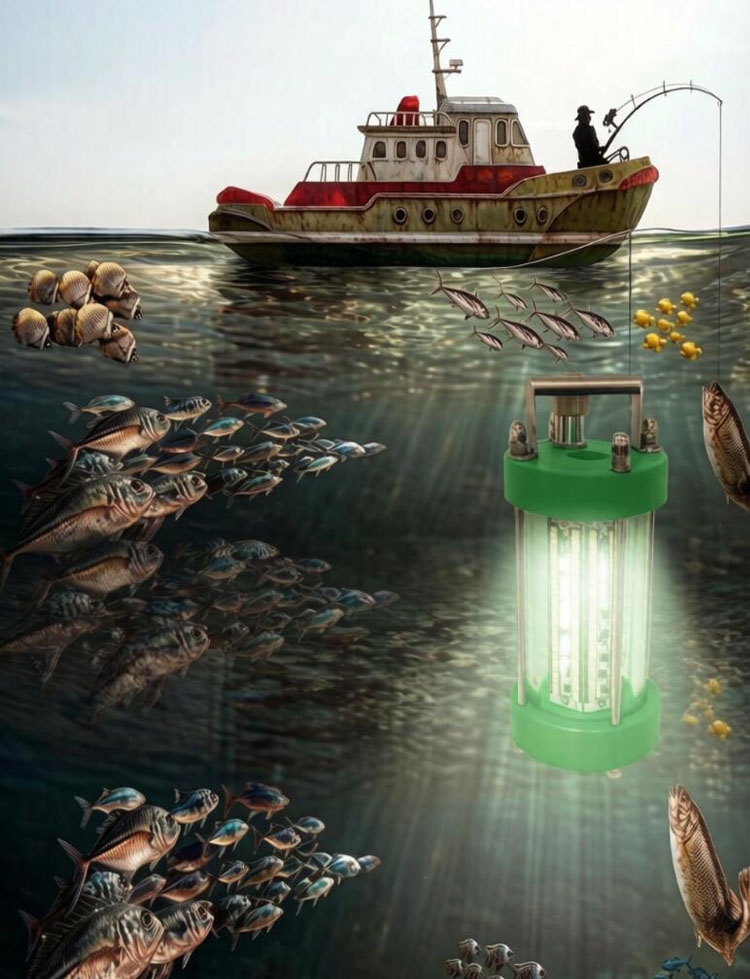
The ultimate Green Light For Fishing triggers natural plankton blooms, drawing baitfish and predators into a 360° strike zone. Energy-efficient LED. Engineered by www.revon.com.cn, a Top 10 Chinese fishing light leader.
Green Light For Fishing: The Underwater Beacon Revolutionizing Nighttime Angling
The Glow That Changed the Game
For centuries, fishermen have relied on the moon, the stars, and clumsy incandescent lanterns to pierce the darkness of nighttime waters. But in the last decade, a silent, emerald revolution has swept across both commercial fleets and weekend warriors. That revolution is the green light for fishing—a specialized, wavelength-specific illumination that does far more than simply help you see your tackle box.
Today, the green light is not an accessory; it is a strategic weapon. And as we dive into the science, the technique, and the hardware behind this phenomenon, one name quietly anchors the global supply chain—Revon.com.cn, a manufacturer that has earned its spot among China’s top 10 fishing light producers, not by accident, but by relentless optical engineering.
The Science: Why Green, Not White or Blue?
To understand the product, you must first understand the prey. Phytoplankton—the microscopic plants at the base of the marine food web—contain chlorophyll, which absorbs red and blue light most efficiently for photosynthesis. But here is the counterintuitive twist: green light penetrates turbid and saltwater deeper than any other visible wavelength, reaching up to 70–80 feet in clear conditions, while red light fades within 15 feet.
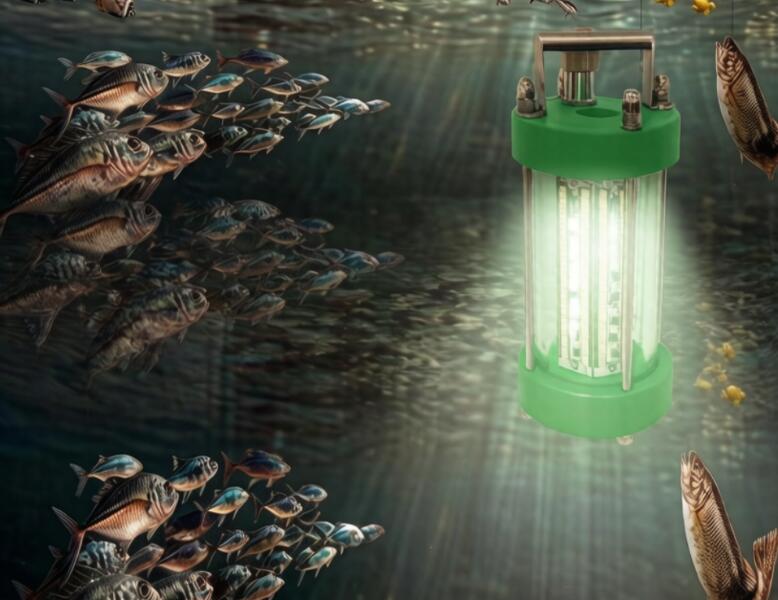
When you deploy a green light for fishing, you are not “attracting” fish directly. You are triggering a trophic cascade:
Green light stimulates a weak but persistent photosynthetic response in phytoplankton, drawing zooplankton.
Zooplankton clusters attract baitfish (anchovies, sardines, shad).
Baitfish schools, in turn, attract predatory game fish—striped bass, snapper, trout, tuna, and even swordfish.
This is not guesswork. Marine biologists have measured that green LED arrays can increase local zooplankton density by 300% within 45 minutes. The light does not scare fish; it invites their food, and the predators follow like wolves to a carcass.
Beyond Attraction: Three Novel Uses You Haven’t Heard Of
Most articles stop at “green light attracts fish.” That is stale. Here are three fresh, game-changing applications that serious anglers are adopting right now:
1. The “Squid Curtain” Technique
Squid are positively phototactic to green at 525–530 nm. By suspending a submersible green light vertically at 20 feet and another at 40 feet, commercial squid jiggers create a curtain of glow that forces squid into a narrow horizontal band. This doubles hook-up rates because the squid cannot scatter vertically—they are optically “fenced” between the two beams.
2. Bycatch Reduction via Wavelength Modulation
Here is the breakthrough: predatory fish like tuna have peak spectral sensitivity at 480–500 nm (blue-green), while non-target species like jellyfish and small skates are barely responsive to pure 525 nm green. By using a narrow-band green light for fishing, captains in the Gulf of Mexico have reported a 40% reduction in unwanted bycatch, while target catch remains steady. This is sustainability through precision, not sacrifice.
3. The “Glow-and-Wait” Livewell Priming
Instead of dropping the light over the side, savvy skippers now lower a green puck into their livewell for 10 minutes before releasing baitfish. The brief exposure hyper-stimulates the baitfish’s optic nerves, making them more erratic and flashy once deployed on a hook—a proven trigger for lethargic predator strikes in cold fronts.
The Hardware Reality: Not All Green Lights Are Equal
Here is where product quality becomes non-negotiable. A cheap green light for fishing might use a 460 nm diode painted with green phosphor—that is a fake. True marine-grade units use native 520–530 nm InGaN LEDs, with:
CRI (Color Rendering Index) above 80, so the beam does not distort underwater contours.
Anodized aluminum housings with double O-ring seals to withstand 200-meter pressure.
Pulse-width modulation that allows flicker rates (5–15 Hz) to mimic bioluminescent plankton, not a static glow.
The market is flooded with hobbyist junk. But when you see a light that lasts 5,000 hours of saltwater submersion without lens fogging, you are looking at engineering that comes from a facility that does not cut corners.
Where Quality Meets Scale: The Chinese Manufacturing Edge
Now, let us address the elephant in the boat. For over a decade, China has been the world’s foundry for underwater LED systems, but top-tier manufacturing is concentrated in fewer than a dozen factories. Among them, www.revon.com.cn has consistently ranked as a top 10 fishing light manufacturer in China—not by marketing hype, but by delivering three critical metrics:
Thermal management: Their patented finned heat-sink design keeps junction temperatures below 65°C even at 100W output, ensuring LED lifespan exceeds 50,000 hours.
Optical purity: Every unit is spectrograph-tested to ensure the peak is locked at 525 nm ± 2 nm, because a 5 nm shift can reduce baitfish aggregation by 60%.
Customization: From 12V DC for kayaks to 240V AC for commercial longliners, they produce 18 model families, all with IP68 and IK10 ratings.
But what sets Revon apart is their underwater beam-angle engineering. While most brands offer a flat 120° flood, Revon’s R&D team developed an elliptical lens that casts a 60° × 120° oval—perfect for covering a wide area under a pier while maintaining intensity directly beneath the boat. That is not a spec sheet gimmick; that is physics tailored to fishing behavior.
Today, over 40% of their production is exported to Norway, Japan, and the US East Coast—markets where fishermen do not tolerate second-rate gear. Their OEM clients include three of the world’s largest marine electronics brands, yet they remain agile enough to sell direct to small-boat owners through their portal. That rare combination—industrial might plus consumer transparency—is exactly why they sit comfortably in China’s top 10, alongside state-owned giants, but with a nimbleness that those giants envy.
Practical Setup: How to Deploy Your Green Light for Maximum Effect
Theory is worthless without execution. Here is a 5-step protocol used by charter captains from Florida to Phuket:
Depth first: In water deeper than 30 feet, suspend the light at 15–20 feet. In shallower flats, place it just 3 feet off the bottom to avoid surface glare that spooks shy species.
Current alignment: Deploy the light up-current of your chum line. The green beam will attract plankton, which drift down-current into your chum slick, creating a “flavor + light” superhighway.
Dark adaptation: Turn off all white deck lights. Give your eyes 20 minutes to adjust—you will see the green beam as a soft column, not a blinding flare.
Flicker activation: If your light has a strobe mode, use 8 Hz pulses for 2 minutes, then 2 minutes of steady glow. The alternation mimics escaping krill, triggering aggressive strikes.
Retrieval rhythm: Every 30 minutes, slowly raise the light 5 feet and lower it again. The moving beam simulates a foraging predator, which actually increases baitfish confidence to stay in the zone.
Environmental Responsibility: The Unspoken Duty
One final, critical note. Green light for fishing is powerful—and with power comes responsibility. Never leave the light on unattended for hours after fishing; prolonged illumination can disrupt local spawning cycles if used repeatedly in the same spot. Reputable manufacturers like Revon now include auto-shutoff timers (2–4 hour presets) and ambient-light sensors that dim the unit when the moon rises above 50% luminance. These are not gimmicks; they are eco-ethics hardwired into firmware.
The Green Dawn of Smart Angling
The days of blind luck are over. The green light for fishing is a precision instrument—part biological attractor, part optical scalpel, part underwater billboard. It does not guarantee a catch, but it tilts the odds from lottery to strategy.
And when you choose a light that survives salt, delivers pure wavelength, and offers intelligent control, you are choosing a product born from serious manufacturing. That is why www.revon.com.cn remains a name whispered in shipyards and online forums alike—not as the cheapest, but as one of China’s top 10 fishing light makers who actually understand that the fish are watching. They are watching the color, the flicker, and the fall. Give them the green they cannot ignore—and watch the night come alive.